- Things to Do in Lepakshi
- Visit the Veerabhadra Temple
- See the Famous Hanging Pillar
- Look at the Big Shivlinga
- Explore the Kalyana Mandapa
- Visit the Monolithic Nandi Statue
- Spend Time at Papanaseshwara Temple
- Learn the Story of Jatayu
- Watch Local Village Life
- Shop for Local Handicrafts
- Taste Local Andhra Food
- Best Time to Visit Lepakshi
- How to Reach Lepakshi
- Things to Keep in Mind While Visiting
- Suggested One-Day Plan for Lepakshi
- FAQs About Things to Do in Lepakshi
- Related Posts
Things to Do in Lepakshi
Lepakshi is a small village in Andhra Pradesh, but it carries a long and powerful history. Many people come here for temples, stories from the Ramayana, and old stone art that still looks alive. The village is calm, slow, and very different from busy tourist places. If you like history, culture, and quiet travel, Lepakshi gives you all of that in a simple way. This guide explains the best things to do in Lepakshi using easy words and clear details so you can plan your visit without confusion.
Lepakshi is best known for its Veerabhadra Temple, but there is much more to see and experience. From ancient pillars and huge stone statues to local food and village life, Lepakshi offers a full-day or weekend trip that feels meaningful and real.
Visit the Veerabhadra Temple
The Veerabhadra Temple is the main attraction and one of the top things to do in Lepakshi. This temple was built in the 16th century during the Vijayanagara Empire. It stands on a small rocky hill and looks strong and grand even today. The temple is dedicated to Veerabhadra, a fierce form of Lord Shiva.
When you walk inside, you will notice wide halls, tall stone pillars, and detailed carvings everywhere. The walls and ceilings have old paintings that show scenes from the Ramayana and Mahabharata. These paintings were made using natural colors, and many of them are still clear after hundreds of years.
The temple has three main shrines. One is for Veerabhadra, one for Lord Shiva, and one for Lord Rama. Each part of the temple has its own story and design. Take your time here and walk slowly. There is a lot to see if you look closely.
See the Famous Hanging Pillar
One of the most talked-about things to do in Lepakshi is seeing the hanging pillar inside the Veerabhadra Temple. Out of many pillars in the main hall, one pillar does not touch the ground fully. There is a small gap between the pillar and the floor.
People often pass a cloth or paper under this pillar to check the gap. No one knows exactly how this pillar was built in such a way. Some believe it was done to show the skill of ancient builders. Others say it was part of a design test. Whatever the reason, it still surprises visitors.
This hanging pillar has become a symbol of Lepakshi. It shows how advanced stone work was during the Vijayanagara period.
Look at the Big Shivlinga
Inside the temple complex, you will also find a very large Shivlinga. This is one of the biggest monolithic Shivlingas in India. It is carved from a single stone and protected by a seven-headed snake carved above it.
The size and smooth finish of the Shivlinga show how skilled the craftsmen were. Many visitors stop here for prayer or quiet time. Even if you are not religious, the place feels calm and powerful.
Explore the Kalyana Mandapa
The Kalyana Mandapa is another important part of the Veerabhadra Temple. This hall was built to show the wedding of Lord Shiva and Goddess Parvati. It is an open structure with no roof and many carved pillars.
Each pillar has figures of gods, dancers, musicians, and animals. The carvings are very detailed. You can spend a lot of time just walking around and looking at each pillar.
There is also a local story linked to this place. It is said that the builder of the temple faced punishment for using royal money. This story adds a serious and emotional layer to the site.
Visit the Monolithic Nandi Statue
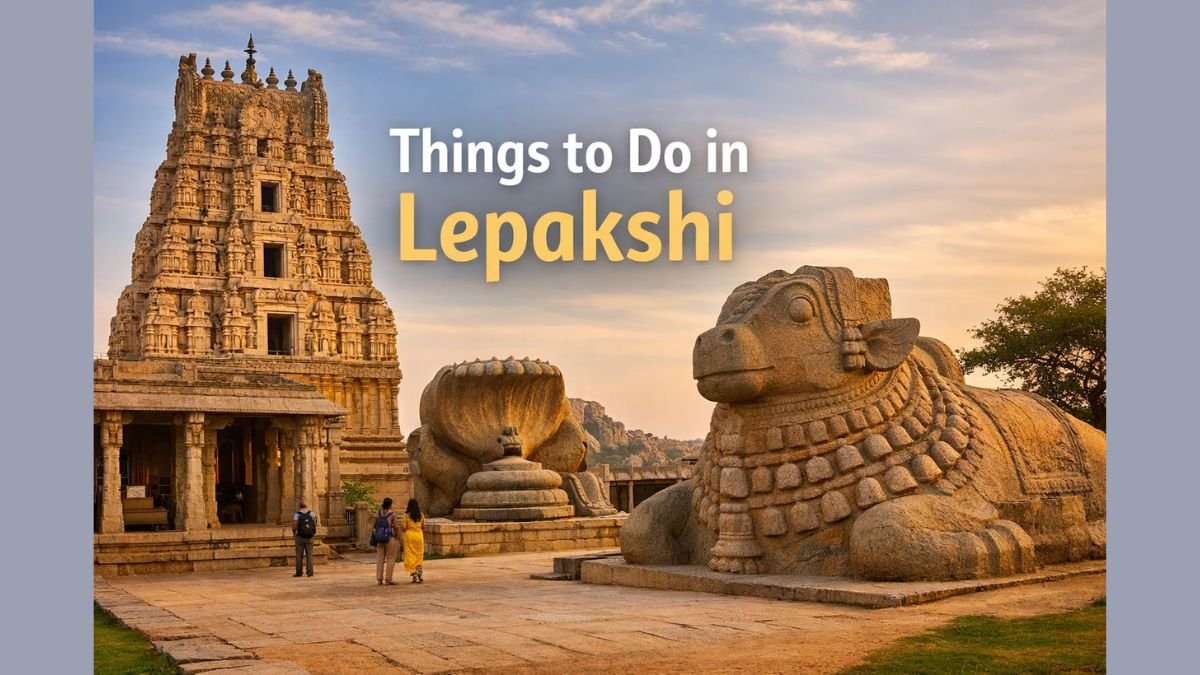
Just a short walk from the temple, you will see the huge Nandi statue. This is one of the largest single-stone Nandi statues in India. Nandi is the vehicle of Lord Shiva, and the statue faces the main temple.
The statue is carved from one rock and decorated with stone bells and ornaments. The area around it is open and peaceful. Many people sit here for a while or take photos.
Visiting the Nandi statue is one of the must-do things to do in Lepakshi. It helps you understand the scale and skill of ancient stone work.
Spend Time at Papanaseshwara Temple
Near the main temple, you will find the Papanaseshwara Temple. This temple is also dedicated to Lord Shiva. The name means the one who removes sins.
This temple is quieter and less crowded. Many visitors come here for silent prayer and rest. The carvings here are simple but meaningful. If you like calm places, this temple is worth a visit.
Learn the Story of Jatayu
Lepakshi is closely linked to the Ramayana story of Jatayu. According to the story, Jatayu fell here after trying to save Sita from Ravana. Lord Rama is believed to have spoken his last words to Jatayu at this place.
There is a footprint inside the temple complex that many believe belongs to Sita. This connection makes Lepakshi an important spiritual place for many people.
Listening to these stories from local guides adds depth to your visit and helps you understand why Lepakshi matters so much.
Watch Local Village Life
One of the simple yet meaningful things to do in Lepakshi is watching daily village life. The village is small and quiet. People move slowly, and life feels relaxed.
You may see locals selling snacks, making handicrafts, or walking to the temple. Children play near open fields, and elders sit and talk. This side of Lepakshi shows real rural life without show or rush.
Shop for Local Handicrafts
Lepakshi is known for traditional Andhra handicrafts. Small shops near the temple sell items made by local artists.
You can find Kalamkari cloth paintings, wooden toys, metal items, and embroidery work. These items are handmade and carry local culture. Prices are usually fair, but polite bargaining is common.
Buying local crafts supports village artists and also gives you a meaningful souvenir.
Taste Local Andhra Food
Trying local food is an important part of things to do in Lepakshi. Small eateries near the temple serve simple Andhra meals.
You can try rice with spicy chutneys, sambar, curd, and vegetable dishes. Snacks like bajji and pakoda are also common. The food is usually fresh and filling.
Most places serve vegetarian food, which suits temple visitors.
Best Time to Visit Lepakshi
The best time to visit Lepakshi is from October to February. The weather is pleasant, and walking around is comfortable. Summers can be very hot, and afternoons may feel tiring.
Try to visit early in the morning or late afternoon to avoid heat and crowds.
How to Reach Lepakshi
Lepakshi is about 120 km from Bangalore and around 15 km from Hindupur. You can reach Lepakshi by road easily.
Hindupur is the nearest railway station. From there, you can take a taxi or local bus. Buses also run from Bangalore to Lepakshi on certain routes.
Things to Keep in Mind While Visiting
Wear simple and modest clothes when visiting temples.
Remove footwear before entering temple areas.
Do not touch paintings or carvings.
Avoid using plastic inside temple areas.
Respect local customs and people.
Suggested One-Day Plan for Lepakshi
Morning: Visit Veerabhadra Temple and Hanging Pillar
Midday: Explore Kalyana Mandapa and Shivlinga
Lunch: Eat at a local restaurant
Afternoon: Visit Nandi statue and Papanaseshwara Temple
Evening: Walk around the village and shop for handicrafts
FAQs About Things to Do in Lepakshi
Is Lepakshi good for a one-day trip?
Yes, Lepakshi is perfect for a one-day trip, especially from Bangalore or nearby towns.
Is photography allowed inside the temple?
Photography is allowed in many areas, but avoid flash near paintings.
Are guides available in Lepakshi?
Yes, local guides are available near the temple entrance.
Is Lepakshi suitable for families?
Yes, Lepakshi is safe and suitable for families and senior citizens.
Lepakshi is not about rush or luxury. It is about history, stone, stories, and silence. The temples, carvings, and legends make it a special place worth visiting at least once. If you enjoy slow travel and meaningful places, Lepakshi will leave a lasting impression.
To check other Articles, Click Here.

“I’m a travel enthusiast who loves exploring new places and sharing stories from my adventures. Through this website, I share simple tips, hidden gems, and ideas to make your trips more enjoyable. Whether it’s beaches, mountains, or local food, I enjoy discovering and writing about it all. When I’m not traveling, I’m planning my next trip or helping others explore new destinations. Let’s discover the joy of travel together!”